

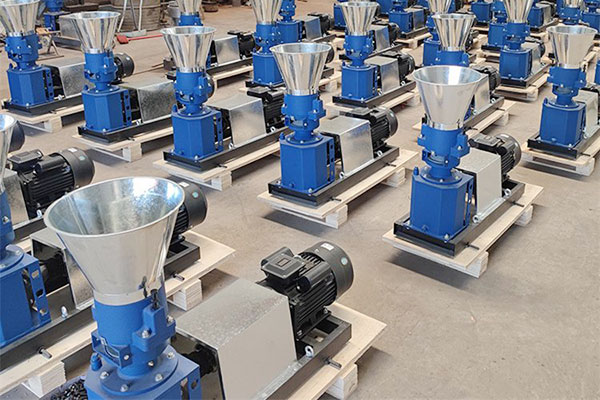

In Sri Lanka’s vibrant poultry sector, producing consistent, nutritious feed is vital. The chicken feed pellet machine in Sri Lanka plays a pivotal role in this transformation, offering local poultry farmers an efficient way to produce high-quality chicken feed pellets tailored to Sri Lankan conditions.
Why Use a Chicken Feed Pellet Machine?
A chicken feed pellet machine transforms raw ingredients—corn, соевая еда, рисовая шелуха, солома, or other grains—into uniform chicken feed pellets, improving feed intake, reducing waste, and enhancing digestion. Pellet mills, especially ring-die and flat-die chicken feed pellet machine, compress powdered feed into dense pellets, which ensures better nutrient retention and animal performance
Locally Relevant Features for Sri Lankan Farms
Adapted capacity: The ring-die chicken feed pellet machine deliver 1.5–2 t/h output with 22 kW power—well-suited for medium to large poultry farms
Efficient pre-processing: Many Sri Lankan smallholdings rely on coarse ingredients like rice husk or straw. A pellet machine with integrated conditioner and proper moisture control ensures smooth pelletizing
Scalable and modular: Sri Lankan farms—from backyard operations to emerging feed businesses—benefit from stacking machines or adding crumble attachments , which crush larger pellets into chick-sized feed with 2–6 t/h capacity
Why It Matters in Sri Lanka
Colombo-based Ceylon Grain Elevators PLC is a key feed supplier, but local pelletizing helps small producers reduce dependence on centralized feed mills
Bairaha Farms, another poultry giant, processes massive volumes of feed annually, underlining domestic demand for efficient pellet feeds
Local conditions like high humidity demand robust pelletizing machines that can manage moisture and prevent mold in feed.
Benefits for Sri Lankan Poultry Farmers
Cost-effective feed production: Using local ingredients reduces reliance on imported feed, lowering overall costs.
Enhanced feed quality: Uniform chicken feed pellets increase feed conversion ratio (FCR), improving weight gain and production efficiency.
Reduced feed waste: Pellets minimize dust and fines, particularly important under humid conditions prevalent in Sri Lanka.
Local ownership and control: Farmers gain independence from distant feed suppliers, aligning with Sri Lanka’s push toward agricultural self-reliance.
How To Choose the Right Feed Pellet Machine?
When selecting a chicken feed pellet machine in Sri Lanka, учитывать:
Type: Ring-die for high volume; flat-die for lower volume or versatile ingredients
Power supply: Ensure compatibility with Sri Lanka’s grid (НАПРИМЕР., 220 V., 50 Hz single-phase for small models like those listed on ikman in Colombo at capacity 80–100 kg/h)
Adaptation to raw materials: A machine that handles local by-products like rice husk, coconut coir, or straw ensures sustainable feed production.

Заключение
Adopting a chicken feed pellet machine in Sri Lanka empowers poultry producers—from small-scale to semi-commercial—to produce consistent, nutritive chicken feed pellets using local materials. These machines enhance FCR, minimize waste, and align with the country’s agri-economic goals. Whether selecting a compact flat-die model or a ring-die system with crumble options, farmers gain greater control and performance—paving the way for a sustainable, self-sufficient poultry industry in Sri Lanka.