

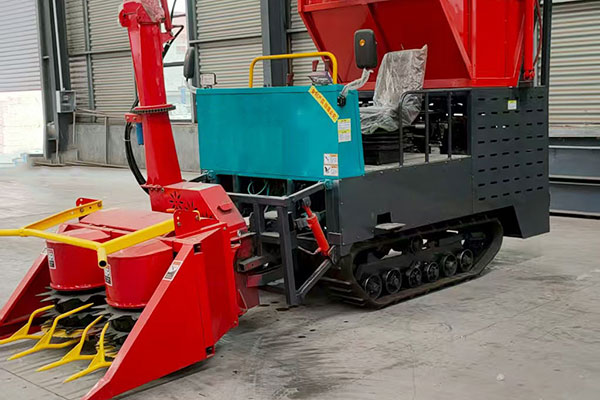

หากคุณอยู่ในเกษตรกรรมยุคใหม่, you’ve seen the impressive results of corn silage – that nutrient-rich, fermented livestock feed that powers dairy and beef operations worldwide. But have you ever wondered how standing corn is transformed into this valuable resource? The answer lies with a remarkable machine: the corn silage harvester. This article will delve into the intricate process of how this engineering marvel works, highlighting why its operation is perfectly tailored to produce high-quality corn silage.
What is Corn Silage and Why is it Important?
Before we explore the machine, let’s understand its product. Corn silage is made by chopping the entire corn plant (stalk, ear, and leaves) and fermenting it under anaerobic conditions. This process preserves its nutritional value, creating a highly digestible, energy-dense feed that is crucial for ruminant animals. The key to perfect corn silage lies in achieving a uniform chop length and effectively breaking the kernels to maximize starch availability – a task at which the modern corn silage harvester excels.

The Step-by-Step Working Process of a Corn Silage Harvester
A corn silage harvester is a mobile processing plant. Its job isn’t just to cut the plant, but to gather, process, and deliver it in a ready-to-ferment state. Here’s a breakdown of its workflow:
- Front-End Retrieving/Cutting
In the field, the front of a corn silage harvester is typically equipped with a corn header tailored to the structure of the corn plant. This header is designed to guide the entire corn plant (including stalks, leaves, and ears) into the machine. Modern self-propelled or mounted models have headers that can be aligned by row, ensuring that the entire plant is neatly introduced.
After the harvester pushes the entire corn plant into the machine, it first uses fixed or rotating blades to sever the base of the plant. This process minimizes the loss of leaves, which are often nutritious.
- Feeding and Stalk Chopping
The cut plants pass through the front-end header and enter the feed screw or feed rollers. This stage is called the feeding phase, where the longer corn stalks are evenly fed into the chopping mechanism. During the feeding process, it is important to ensure consistent speed and avoid blockages or excessive impact.
After entering the main shredding unit, the corn silage harvester uses a cutterhead or a rotating disc/drum blade system to destem and initially shred the plants. During shredding, the blades rotate at high speed, chopping the entire plant into shorter segments (โดยทั่วไป 5-25 มม., adjustable depending on fermentation requirements) to facilitate subsequent compaction and fermentation.
During this process, the machine may include internal blades or shear bars to control the cut length and re-cut the remaining segments.
- Kernel Processor
For corn silage, simply shredding the entire plant is not sufficient; the starch in the kernels needs to be better exposed for efficient digestion. ดังนั้น, many corn silage harvesters are equipped with a kernel processor.
A kernel processor is typically composed of two or more sets of high-speed rollers that crush or split the corn kernel hulls through fracturing and intermeshing, releasing the starch inside. A kernel crusher is typically installed between the chopping unit and the discharge chute.
In some models, this component can be removed or bypassed, increasing flexibility when harvesting non-corn silage crops.
- Acceleration and Ejection
The chopped material is ejected outward at high speed by an accelerator/blower fan. This process not only requires sufficient air pressure to eject the feed into the trailer behind, but also ensures a smooth flow of material without blockage or ripples.
Some corn silage harvesters are also equipped with flappers or guide vanes to adjust the direction of the feed ejection, ensuring more precise and balanced unloading onto a trailer or storage vehicle.
- Unloading/Transportation
The material, accelerated by the fan, is ejected through the discharge chute (also known as a discharge pipe/chimney) and loaded into a trailer or storage vehicle. Some self-propelled models come with a matching trailer, and some also have synchronized side discharge designs.
Once fully loaded, the trailer can leave the field and be unloaded into a silo, silo pit, or sealed storage area for subsequent compaction and sealed fermentation. This process requires smooth, precise unloading without flying material or blockage.
- Post-Processing/Quality Control
During the harvesting process and after unloading, corn silage harvester operators typically monitor the following key parameters:
Chop Length: Controlling the size of the shredded corn by adjusting the blades or shear bars to achieve the desired density and fermentation state.
Moisture Content/Humidity Monitoring: Improper crop moisture can lead to poor fermentation or mold.
Load Monitoring/Quality Sensors: Many modern harvesters are equipped with sensors that measure material flow, tonnage, and load for precise control and calibration.
Cleaning/Waste Control: Promptly clean plant debris, fallen leaves, and blocked areas to minimize nutrient loss and equipment wear.
Maintenance and Blade Replacement: Regularly replace or sharpen blades and inspect rollers, bearings, and tensioners to maintain equipment efficiency and cut quality.
Here is the silage harvester machine working youtube video for your reference!!
Affecting Harvesting Efficiency and Forage Quality Key Factors
While understanding the principles of “how does a corn silage harvester work?” is crucial, several factors significantly impact final silage efficiency and forage quality in practice. The following points require special attention:
Front-end cutter adaptability: Whether the cutter head can accurately and evenly pick up material is crucial for reducing leaf loss and crop residue.
Blade quality and wear: Blade sharpness, material, and wear resistance directly affect cut smoothness and segment consistency.
Feed system compatibility and stability: Excessive feed speeds can cause blockages, while too slow feed speeds reduce efficiency.
Accurate kernel cracker adjustment: Poor kernel processing can affect digestibility, so cracker clearance and alignment must be precise.
Fan/accelerator performance: Adequate air volume and pressure ensure smooth material unloading and conveying.
Material uniformity/density: A uniform distribution of cut segments facilitates subsequent baling, compaction, and fermentation.
Machine load and power matching: Is the overall machine power suitable for the crop density? Is the load exceeding the specified range during high yields?
Environmental conditions: Topography, field humidity, elevation fluctuations, wind speed, and other factors can all affect actual performance.
Across the entire harvesting, transportation, and fermentation chain, a weak link in any one process can undermine the overall performance of the corn silage harvester.

Practical Operational Considerations and Optimization Suggestions
To better answer the question, “How does a corn silage harvester work?” and help users understand how to optimize operations, here are some practical tips and best practices:
Warm-up and Inspection: Before the corn silage season begins, when switching the machine from hay/silage mode to corn silage mode, replace the blades, adjust the shear bar, and replace or calibrate the kernel crusher.
Appropriate Speed Control: Field speeds should be kept within a reasonable range to ensure stable coordination between the feeding, การตัด, and conveying systems.
Regularly Calibrate Weights/Sensors: Weigh several loads of material and compare the machine’s sensor readings for calibration.
Timely Cleaning and Maintenance: After operations, remove stubble, rinse the machine, air dry it, and lubricate the bearings to prepare for the next season.
On-site Fermentation Monitoring: Regularly sample the silo to check pH, อุณหภูมิ, and fermentation status to assess whether chop length and moisture content are properly controlled.
Job Scheduling and Transport Matching: Ensure unloading trailers are readily available to avoid waiting for harvesters and maximize machine uptime.
บทสรุป
Through this detailed explanation of each stage, from retrieving – การตัด – kernel crushing – accelerated ejection – unloading – and quality control, readers can clearly understand the working mechanism of the corn silage harvester and the key functions of each link. It is the coordinated operation of these links that ensures the output of high-quality corn silage. For more detailed information about the corn silage harvester, please feel free to leave us a message online for more information!