

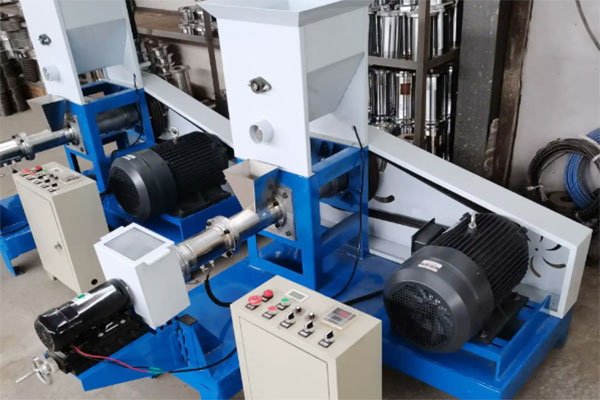

Fish Feed Pellet Machine Price in Nigeria is one of the most searched topics among aquaculture investors and farmers. In Nigeria, the price of a fish feed pellet machine typically ranges from a few hundred dollars to tens of thousands of dollars depending on the size, configuration, et niveau d'automatisation. Small-scale farmers often start with affordable, semi-automatic units, while commercial aquaculture businesses invest in fully automated production lines. The cost is mainly driven by machine configuration, production capacity, and engineering professionalism.
Fish Feed Pellet Machine Configuration and Capacity
The fish feed pellet machine price in Nigeria is directly influenced by its configuration. Basic models that handle 60–100 kg per hour are suitable for small catfish farms commonly found in rural Nigerian states like Ogun or Oyo. These machines are budget-friendly but limited in output. D'autre part, advanced extruder models with stainless steel build, digital control panels, and high-capacity die systems can produce several tons daily. These are ideal for large aquaculture hubs near Lagos or Port Harcourt, where commercial fish farming is booming. Naturally, higher-capacity machines require more investment, but they help farmers reduce feed costs in the long run.
Engineering Professionalism and Build Quality
Another factor shaping fish feed pellet machine price in Nigeria is the level of engineering professionalism. Locally assembled machines may be cheaper but often lack durability and precision, leading to inconsistent pellet size and higher maintenance costs. En revanche, internationally engineered machines with advanced cutting systems, automatic lubricating parts, and strong material quality command a higher price but guarantee reliability. For Nigerian farmers seeking to compete in the growing aquaculture export market, investing in professional-grade machines ensures consistent pellet quality that meets market standards.
Technology and Customization
Modern fish feed pellet machines often come with advanced technologies such as floating feed production, energy-efficient motors, and adjustable die sizes. These features are particularly valuable in Nigeria, where energy supply challenges can disrupt operations. A machine with stable performance and fuel-saving design can significantly reduce operational costs. En plus, some farmers require customization to match local feed ingredients like maize, soja, or groundnut cake, which also adds to the price but increases long-term efficiency.

Conclusion
En résumé, the fish feed pellet machine price in Nigeria varies widely, starting from a few hundred dollars for basic models up to tens of thousands for automated systems. Factors like machine configuration, capacité, professionalism, and technology play critical roles in determining the final investment. For Nigerian aquaculture businesses, choosing the right machine is not just about cost but about long-term sustainability and competitiveness.
👉 We’d love to hear your thoughts! What challenges have you faced with fish feed pellet production in Nigeria? Share your comments below, et n'oublie pas d'aimer, partager, and repost this article on your favorite social media platform to support fellow farmers.