

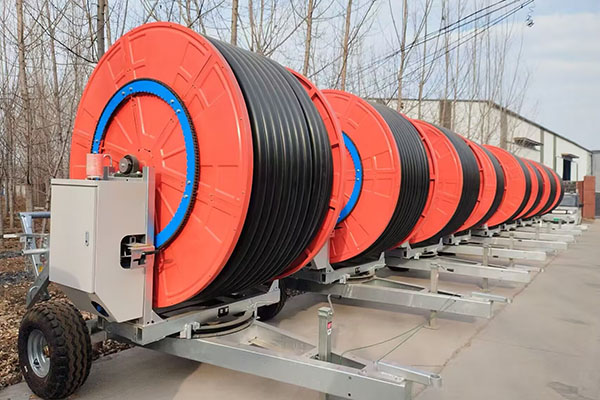

Lors de la sélection d’un système d’irrigation à enrouleur de tuyau, comprendre ses exigences électriques est essentiel pour garantir un fonctionnement stable, efficacité énergétique, et durabilité à long terme. Qu'il soit utilisé dans les champs agricoles, terrains de sport, ou des projets d'aménagement paysager, la configuration électrique a un impact direct sur les performances du système.
Overview of Electrical Components in a Hose Reel Irrigation System
A modern hose reel irrigation system typically integrates several electrical elements, especially in automated or motor-driven models. These include:
Electric drive motors (for hose rewinding)
Control panels or programmable controllers
Sensors (pression, vitesse, or position monitoring)
Power supply connections (380v three-phase)
The complexity of the hose reel irrigation system determines the level of electrical setup required. Manual systems may have minimal requirements, while fully automated units rely heavily on stable electrical input.
Power Supply Requirements
Most medium to large-scale hose reel irrigation system units operate on either:
Three-phase power(380V)(Continuous supply for at least ten hours) is generally recommended for a hose reel irrigation system because it provides better efficiency, smoother motor operation, and reduced risk of voltage drops over long distances.
Motor Specifications
The motor is the core electrical component of any hose reel irrigation system. Key parameters include:
Power rating: typiquement 0.75 kW to 5.5 kw
Protection class: IP55 or higher for outdoor use
Insulation class: usually Class F
Choosing the correct motor ensures that the hose reel irrigation system can maintain consistent retraction speed under varying load conditions.
Control Systems and Automation
Advanced hose reel irrigation system models often include intelligent control systems. These may feature:
Digital control panels
Variable frequency drives (VFDs)
Remote operation capability
A VFD is particularly useful in a hose reel irrigation system as it allows precise control of motor speed, improving irrigation uniformity and reducing energy consumption.
Here is the hose reel irrigation system working youtube video for your reference!!
Cable and Protection Requirements
Proper cabling is essential for safe operation of a hose reel irrigation system. Consider the following:
Use weather-resistant cables (Par exemple, rubber or PVC insulated)
Ensure proper grounding to prevent electrical hazards
Install circuit breakers and overload protection
Electrical protection systems safeguard the hose reel irrigation system from short circuits, overloads, and environmental damage.
Energy Efficiency Considerations
Optimizing energy use is increasingly important. A well-designed hose reel irrigation system should:
Minimize power loss through efficient motor selection
Use automation to avoid unnecessary operation
Maintain stable voltage supply
Energy-efficient operation not only reduces costs but also extends the lifespan of the hose reel irrigation system.
Installation Best Practices
For reliable performance, installation of a hose reel irrigation system must follow professional standards:
Ensure voltage stability within ±10%
Position control panels in dry, protected areas
Regularly inspect electrical connections
Improper installation can lead to frequent failures and reduced efficiency of the hose reel irrigation system.

Conclusion
Understanding the electrical requirements of a hose reel irrigation system is essential for maximizing performance and ensuring safe operation. From power supply selection to motor configuration and protection systems, every detail plays a role. By carefully planning and implementing the right electrical setup, users can significantly improve the reliability and efficiency of their irrigation operations.