

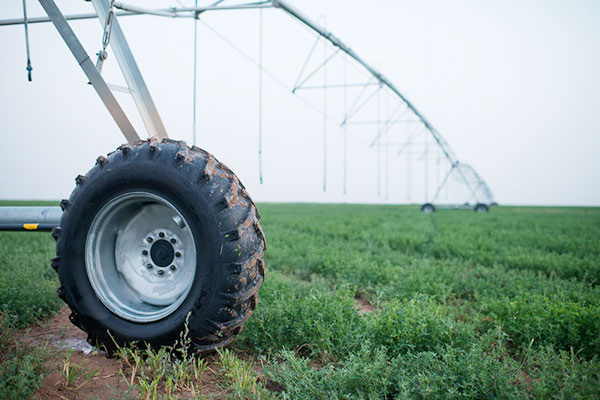

Understanding how do center pivot irrigation systems move is essential for farmers and agricultural investors who want to maximize water efficiency and crop yield. A center pivot irrigation system is one of the most widely used irrigation technologies in large-scale agriculture, particularly in corn, wheat, alfalfa, and forage production. Its movement mechanism is the core reason this system delivers uniform irrigation over large circular fields.

Center Pivot Irrigation System Movement Principle & Core Components
At its most basic level, a center pivot irrigation system consists of a central span or arcing pipe that rotates around a fixed sprinkler head located at the field’s center. The primary motion is a slow, controlled rotation of the entire pivot assembly, driven by a gear-driven or motorized wheel system. The system moves with a combination of three key elements:
- Drive mechanism: Typically a drive unit at the end of each sprinkler arm, powered by electric motors or hydraulic drives, converts electrical energy into rotational force. Precision control ensures steady angular speed and synchronization across spans.
- Wheel or tower assembly: A series of wheels or short towers support the lateral pipeline as it extends outward. These supports roll along the ground, maintaining alignment and stability while minimizing soil compaction.
- Control system: Modern centers are equipped with embedded controllers, weather sensors, and remote communication capabilities. The control system adjusts speed, rotation direction (usually clockwise), and stop/start cycles to accommodate crop type, irrigation schedules, and field boundaries.

| Item | Parameter |
|---|---|
| Total System Length (m) | 252 |
| Irrigation Circle Radius (m) | 255.4 |
| Minimum Rotation Cycle (h) | 9.4 |
| Total Flow Rate (m³/h) | 85.3 |
| Maximum Irrigated Area (Ha) | 20.5 |
| Daily Irrigation Intensity (mm/m²/day) | 10.0 |
| Operating Power (kW) | 2.8 |
How Movement Translates To Uniform Irrigation
The circular path created by the pivot ensures that every point in the field receives water at a consistent rate over time. The central pivot acts as the locus of motion, while the sprinkler nozzles on each span deliver water along the arc. Key factors that influence uniformity include:
- Travel speed: Too fast or too slow can cause uneven water distribution. Operators tune travel speed to match nozzle flow rates and field size.
- Sprinkler spacing and nozzle choice: Larger fields or higher evapotranspiration (ET) requirements demand appropriate nozzle types and arc lengths to maintain soil moisture targets.
- Ground conditions: Uneven terrain or soil crust can affect wheel traction and alignment. Regular maintenance of the wheel assemblies helps preserve uniform radius and prevent over- or under-watering zones.
- System pressure management: Adequate pump pressure and consistent supply stability ensure every segment receives the intended flow, especially near the tips where hydraulics face higher friction losses.
Here is the center pivot irrigation system youtube video for your reference!!
Configuration Options & Their Implications
Center pivot irrigation systems come in various configurations to fit different crops and soils:
- Single-span vs. multi-span: Single-span systems are ideal for smaller fields or tighter budgets, while multi-span pivots cover larger areas with longer radii. Each additional span introduces more complexity in control, alignment, and motor load distribution.
- Corner and end-gun variants: Some setups use an end gun or corner systems to irrigate adjacent fields with more flexible shapes. These options can broaden coverage but require careful water budgeting to avoid over-irrigation near the field edges.
- Drive types: Electric motors are common for precise control and easy integration with automation. Hydraulic drives offer robust torque in challenging terrains but may require additional maintenance.
- Sprinkler types: Center pivot systems can accommodate spray, streamer, or sprinkler heads. The choice affects uniformity, energy use, and soil infiltration rates.
Why Movement Design Matters for Irrigation Efficiency
The movement design directly affects irrigation uniformity. Because the outer end of the center pivot irrigation system travels faster than the inner sections, sprinkler size and flow rate are carefully engineered. This coordinated movement ensures crops receive even water coverage.
From an engineering perspective, the movement system is what makes the center pivot irrigation system superior to traditional flood or manual irrigation methods.
Here is the movable center pivot irrigation system youtube video for your reference!!
How To Choose The Right Center Pivot Irrigation System?
When evaluating options, consider:
- Field size, shape, and topography: Larger fields with uniform soil benefit from multi-span pivots, while uneven terrain may require enhanced leveling and tire pressure management.
- Crop water requirements: ET, root depth, and crop type influence nozzle selection and irrigation scheduling.
- Water source and quality: Proximity to a water source and the presence of particulates or salinity can dictate filtration needs and pump sizing.
- Energy efficiency: Look for variable-frequency drives (VFDs) and intelligent control software that optimize travel speed and pump output to minimize energy use.
Practical Case Insights
For farmers transitioning from traditional flood irrigation to a center pivot system, the benefits are often immediate: reduced labor, more precise water application, and better crop yields when paired with soil moisture sensing. In regions with strict water-use regulations, a well-tuned center pivot irrigation system can achieve higher uniformity and lower overall water consumption. Engaging an experienced dealer or irrigation consultant helps tailor the system to local climate, soil type, and crop calendars.
Conclusion
So, how exactly does a center-pivot sprinkler system achieve its smooth operation? This mature irrigation solution relies on the synchronized drive of each tower, intelligent alignment control, and precise motor speed regulation to ensure stable rotation around a central pivot point. A well-designed system not only ensures long-term reliable operation, significantly reduces labor input, and dramatically improves water efficiency, but it is also a long-term investment in modern agriculture for the future. By deeply understanding its operating principles and learning to optimize various parameters for uniform irrigation, you can make a more informed decision when choosing a center-pivot irrigation system. This allows us to help you plan and design an irrigation solution that maximizes crop yield while efficiently conserving water resources. Ultimately, through careful selection and proactive maintenance, your center-pivot irrigation system can maintain stable performance across different growing seasons.