

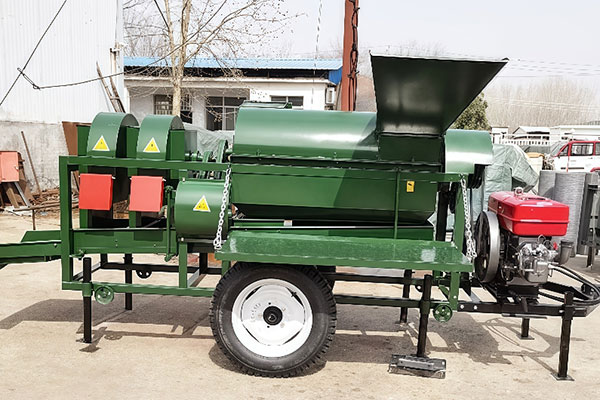

En el procesamiento moderno de cereales, Mejorar la eficiencia poscosecha es fundamental para las granjas y las empresas agrícolas.. A trillador de maíz Desempeña un papel central en la separación rápida de los granos de maíz de las mazorcas y, al mismo tiempo, minimiza la pérdida de grano.. Entendiendo cómo un trillador de maíz opera ayuda a los compradores, distribuidores, y los operadores agrícolas eligen el equipo adecuado para diferentes escalas de producción.

Principio de funcionamiento de la trilladora de maíz
La función fundamental de un trillador de maíz Es la separación mecánica del grano mediante impacto., fricción, y cribado. Después de la cosecha, las mazorcas de maíz se introducen en la entrada de la máquina., el tambor giratorio interno inicia el proceso de trilla.
Dentro de un típico trillador de maíz, un tambor trillador de alta velocidad equipado con dientes o barras raspadoras gira continuamente. Cuando el maíz entra en la cámara, el tambor golpea y frota las orejas contra una pantalla cóncava. Esta acción mecánica controlada permite que trillador de maíz para separar los granos de manera eficiente sin roturas excesivas.
Una vez que ocurre la separación, la gravedad y el flujo de aire ayudan al trillador de maíz en mover los granos hacia abajo a través del sistema de tamiz mientras que los residuos de mazorcas más grandes se descargan por la salida. Este flujo de trabajo continuo permite un funcionamiento estable incluso con grandes volúmenes de alimentación..
Componentes estructurales clave
Un alto rendimiento trillador de maíz normalmente consta de varios sistemas coordinados:
1. Sistema de alimentación
La tolva de alimentación garantiza una entrada uniforme del material.. Un diseño de alimentación adecuado permite trillador de maíz para evitar bloqueos y mantener una eficiencia de trilla constante.
2. Tambor de trilla y cóncavo
Esta es la sección de trabajo principal de cualquier trillador de maíz. La velocidad del tambor y la disposición de los dientes influyen directamente en la tasa de separación, limpieza del grano, y proporción de daño al grano.
3. Unidad de limpieza y cribado
despues de la trilla, el trillador de maíz utiliza cribas vibratorias o ventiladores de flujo de aire para eliminar fragmentos de cáscara, polvo, y partículas de mazorca rotas, garantizar una producción de grano más limpia.
4. Sistema de transmisión de energía
Ya sea impulsado por un motor eléctrico, motor diésel, o toma de fuerza del tractor, el trillador de maíz convierte la energía en fuerza rotacional para un funcionamiento estable a largo plazo.
Ventajas de rendimiento de las trilladoras de maíz
Comparado con el bombardeo manual, un moderno trillador de maíz aumenta significativamente la productividad al tiempo que reduce la intensidad del trabajo. Las ventajas operativas clave incluyen:
- Alta eficiencia de trilla con procesamiento continuo
- Reducción de la tasa de pérdida y daño del grano
- Rendimiento estable bajo diferentes condiciones de humedad
Un configurado correctamente trillador de maíz puede procesar varias toneladas de maíz por hora, haciéndolo adecuado para cooperativas, centros de acopio de granos, y granjas comerciales. Además, El equilibrio optimizado del tambor permite trillador de maíz para operar con menor vibración y consumo de energía.

Escenarios de aplicación y selección de equipos
Hoy, el trillador de maíz Se aplica ampliamente en pequeñas explotaciones agrícolas., proveedores de servicios agrícolas, y líneas de procesamiento de maíz de mediana escala. Al seleccionar el equipo, Los usuarios deben evaluar la demanda de capacidad., disponibilidad de energía, y nivel de humedad del cultivo.
Para regiones de recolección móviles, un compacto trillador de maíz Ofrece fácil transporte y operación de campo flexible.. Las explotaciones más grandes suelen integrar la trillador de maíz en sistemas poscosecha mecanizados para crear un flujo de trabajo continuo de manipulación del maíz.
Conclusión
Entendiendo cómo un trillador de maíz Un trabajo revela por qué sigue siendo una de las máquinas más esenciales en el procesamiento poscosecha del maíz.. Mediante impacto coordinado del tambor, separación por fricción, y mecanismos de limpieza, el trillador de maíz transforma el descascarado que requiere mucha mano de obra en un proceso mecánico eficiente.
A medida que la mecanización agrícola continúa avanzando, invertir en una empresa confiable trillador de maíz asegura una mayor productividad, mejora de la calidad del grano, y rentabilidad agrícola sostenible.