


If you’re searching for a clear answer: silage bales typically take 2 к 6 weeks to complete primary fermentation, depending on moisture, плотность, and sealing quality. Under optimal conditions, stable preservation can begin as early as 14 days, but full fermentation and best feed quality are usually achieved after 30–45 days.
This timeline matters because harvesting too early or opening bales too soon directly affects feed value, livestock performance, and storage losses.
What Actually Happens During Fermentation?
Silage fermentation is a controlled anaerobic process driven by lactic acid bacteria. The timeline can be broken down into three phases:
1. Aerobic Phase (0–2 Days)
- Oxygen is still present inside the bale
- Plant respiration consumes sugars
- Heat is generated (risk of nutrient loss if prolonged)
👉 Key factor: How tightly the bale is packed
2. Active Fermentation Phase (3–21 Days)
- Oxygen is depleted
- Lactic acid bacteria convert sugars into acids
- pH drops from ~6.0 to below 4.5
👉 This is where preservation actually happens
3. Stable Storage Phase (After 3–6 Weeks)
- Fermentation slows and stabilizes
- Nutrients are preserved
- Silage is ready for feeding
What Determines Fermentation Speed?
Not all silage bales ferment at the same rate. The main variables are:
1. Moisture Content (Critical Range: 45–65%)
- Too wet → risk of butyric fermentation (poor quality)
- Too dry → insufficient compaction, trapped oxygen
2. Bale Density (Most Overlooked Factor)
Higher density = less oxygen = faster fermentation
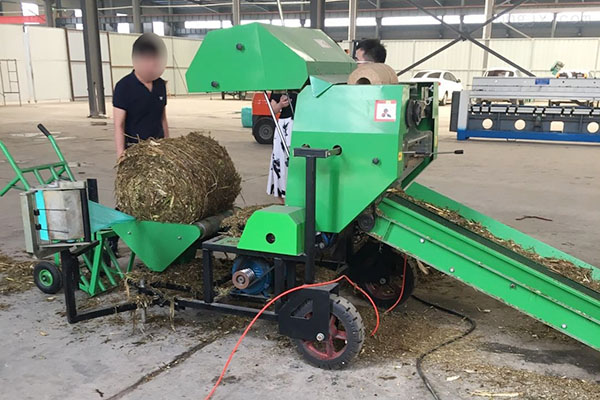
This is where machinery becomes decisive. А silage bale machine directly controls:
- Compression force
- Bale uniformity
- Air exclusion efficiency
A poorly compacted bale can delay fermentation by 1–2 weeks and increase spoilage risk.
3. Sealing Quality
- Immediate wrapping is essential
- 4–6 layers of stretch film recommended
- Any air leakage disrupts fermentation
4. Crop Type
- Grass silage: faster fermentation
- Corn silage: more stable due to higher sugar content
- Legumes: slower, require better management

The Role of a Round Silage Bale Machine
From field experience and project feedback, equipment quality is one of the biggest hidden variables in fermentation success.
A modern round silage bale machine improves fermentation outcomes in three ways:
1. Higher Bale Density
Advanced hydraulic systems ensure tighter packing, reducing oxygen pockets.
2. Consistent Bale Shape
Uniform round bales wrap more effectively, minimizing air ingress.
3. Integrated Wrapping Efficiency
Some systems combine baling and wrapping, reducing time between steps—this is crucial because even a 1-hour delay can affect fermentation quality.
In practical terms:
- Low-end machines: fermentation may take 5–6 weeks with higher loss risk
- Optimized machines: stable silage achievable in 3–4 weeks

Real-World Insight: Why Timing Alone Isn’t Enough
Many buyers focus only on “how many days”, but in reality:
Fermentation speed is not just about time—it’s about conditions created at the moment of baling.
In multiple export cases (Африка, Southeast Asia), users with the same crop saw completely different results:
- One achieved usable silage in 21 days
- Another needed over 40 days with visible mold
The difference? Bale density and sealing consistency, both tied directly to the silage bale machine used.
Practical Recommendations
If your goal is predictable fermentation:
- Target 50–60% moisture at baling
- Use a high-density silage bale machine
- Wrap within 30 minutes after baling
- Store bales away from sharp objects and direct damage
- Wait at least 30 days before opening for best results
Final Answer
To summarize clearly:
- Minimum fermentation: 2–3 weeks
- Optimal fermentation: 4–6 weeks
- Key determinant: bale density + sealing quality, not just time
If you’re evaluating equipment or planning a silage system, it’s worth prioritizing machinery that ensures consistent compaction and airtight wrapping—because that’s what ultimately controls fermentation success.
We’ve worked with farmers and distributors across different climates and crop conditions, and we’re happy to share practical recommendations based on real use cases—not just standard specifications.
👉 Leave us a quick online message or comment with your:
Crop type (трава, кукуруза, солома, и т. д.)
Expected capacity (e.g. 5T/H, 10T/H)
Current challenges (slow fermentation, mold, low density, и т. д.)
Our team will respond with:
Tailored machine suggestions (including suitable round silage bale machine options)
Estimated bale density and fermentation performance
Practical tips to reduce losses and improve silage quality
No pressure—just useful, experience-based input to help you make a better decision.